

The Second International Conference on Digital and AI Technologies for Healthcare and Medical Advances
Lisbon, Portugal
November 1 - 5, 2026
This event will be held in hybrid mode, with both on site and remote options.
ISSN:
TBA
ISBN:
978-1-68558-458-0
Submission:
September 1, 2026
Notification:
September 18, 2026
Registration:
October 3, 2026
Camera Ready:
October 10, 2026
Submission deadline: September 1, 2026
- At a Glance
The International Conference on Digital and AI Technologies for Healthcare and Medical Advances (AIHMA) 2026 aims at harnessing the transformative power of digital and AI technologies in healthcare.
Conference Chairs

CEO PhD MBA
Sarfraz Khokhar
Rasimo Systems, Raleigh, NC, USA

CEO & Founder
Meghan Conroy
CaptureProof, USA
Advisory Board

Prof. Dr.
Michel A. Audette
Old Dominion University, USA

Prof. Dr.
Mounîm A. El Yacoubi
Institut Polytechnique de Paris, France
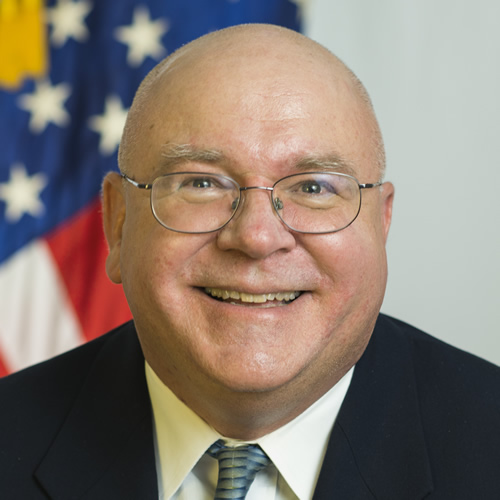
William Yurcik
Centers for Medicare & Medicaid Services (CMS), USA
Participate
If you want to get involved beyond submitting an article, please consider organizing a workshop, a thematic session, or a demo. Details are available on the Event Satellites page.
- Call For Papers
The International Conference on Digital and AI Technologies for Healthcare and Medical Advances (AIHMA) 2026 aims at harnessing the transformative power of digital and AI technologies in healthcare. Across its main themes, the event intends to explore the integration of innovative digital tools into various aspects of health and medical care. From breakthroughs in drug discovery and development, to advancements in personalized medicine, the conference will spotlight how digital solutions can foster healthier populations worldwide.
Each conference track is designed to delve into specific sectors of healthcare, emphasizing practical applications, advanced solutions, and well-being services.
Professionals from industry, government, and academia, researchers, engineers, practitioners, and students are invited to contribute. AIHMA welcomes 1) full papers presenting significant research, development, application, position, or survey, 2) short papers on work-in-progress, 3) posters, 4) contributed talk presentations, as well as workshops, thematic sessions, and demos.
Prospective authors are invited to submit original, unpublished works, which are not under review in any other conference or journal. Topics of interest include, but are not limited to, the following.
Topics
- Telemedicine and remote healthcare
- Wearable health devices
- Mobile health applications (mHealth)
- AI and machine learning in healthcare
- Blockchain-based tools in healthcare
- Integration of wearable devices with health platforms
- Cross-border health data collaboration
- Global health policies and digital technologies
- Future trends in digital health technologies
- Disease surveillance and outbreak management
- Vaccination and immunization programs
- Health policy and global health governance
- Environmental health and sustainability
- Nutrition and food security
- Health promotion and disease prevention
- AI solutions for low-resource settings
- Digital health in humanitarian aid
- Digital mental health solutions
- Workplace mental health
- Mental health policy and advocacy
- Child and adolescent mental health
- Mental health during crises
- Integrative approaches to mental well-being
- Digital therapeutics for mental health
- AI and chatbots for mental health support
- Apps for stress management and resilience building
- Telepsychiatry and remote counseling
- Health data analytics and big data
- Health Information Systems (HIS)
- Health informatics education and training
- Digital health literacy
- Health information security and privacy
- Protection of patient personal data
- Digital innovation in health informatics management
- Medical systems integrations cross-hospitals
- Fitness, behavioral change, habit formation and lifestyle Apps
- Mobile Apps for chronic disease management (e.g., diabetes, hypertension)
- Preventative health and wellness Apps
- Behavioral health and mental health Apps
- Wearable devices and mHealth Apps
- Effectiveness of mHealth Apps
- Body sensing and networks
- Monitoring vital signs and symptoms patterns
- Personalized datasets and diagnosis prediction
- AI/M and personalized datasets in mHealth
- Big data and analytics in mHealth
- Telemedicine and remote monitoring through mobile Apps
- Ethics and privacy for development and deployment of mHealth solutions
- Effectiveness of mHealth Apps in clinical practice
- Integration of mHealth Apps and hospital medical systems
- mHealth networking and communication technologies
- Machine learning models for drug discovery
- Generative models for drug design
- AI for clinical trial optimization
- AI in personalized medicine
- Constructing knowledge graphs for drug discovery
- Network pharmacology and drug repurposing
- Data curation and quality control
- Genomics and gene-based approaches in drug discovery
- Pharmacogenomics and personalized medicine
- AI for accelerating drug discovery
- Predictive modeling for drug efficacy and safety
- Personalized drug development
- Case studies of AI in pharmaceutical research
- AI-powered personalized diagnostic tools
- Personalized treatment plans using AI
- Genomic data analysis for precision medicine
- AI in pathology and radiology
- AI for disease surveillance and outbreak prediction
- Digital tools for epidemiological research
- Contact tracing technologies
- AI in population health management
- Digital Tools for healthy aging
- Technologies for elderly care
- AI and robotics for assisted living
- Digital solutions for cognitive health
- Health monitoring for aging populations
- Immersion solutions for palliative care
- Building smart hospitals and clinics
- IoT in healthcare infrastructure
- Smart home health solutions
- Enhancing healthcare delivery with smart technology
- Equity in digital health access
- Ethical AI practices in healthcare
- Addressing health disparities with digital tools
- Data privacy and security in health technologies
- Digital tools and health literacy
- Patient portals and health information access
- Patients Engagement and Empowerment with self-management tools
- Access to healthcare services
- Socioeconomic factors and health
- Cultural competence in healthcare
- Global health organizations partnerships and collaborations
Instructions for Authors
For more information on the submission process, please consult The Detailed Instructions for Authors.
To submit your work to this event:
- Scientific Board
- Mohammed Salah Al-Radhi, Budapest University of Technology and Economics, Hungary
- Hugo Fernando Azevedo Barbosa, Lusófona University & SIIS – Social Innovation and Interactive Systems | Porto Polytechnic, Portugal
- Michel A. Audette, Old Dominion University, USA
- Valérie Barbier, Firefighters Brussels, Belgium
- Ahmed Bentajer, MISCOM Lab. | ENSA Safi | UCA Marrakech, Morocco
- Advaith Bongu, Rutgers-Robert Wood Johnson Medical School, USA
- Ozgu Can, Ege University, Turkey
- Ahana Roy Choudhury, Valdosta State University, USA
- Meghan Conroy, CaptureProof, USA
- Mounîm A. El Yacoubi, Institut Polytechnique de Paris, France
- Gilson A. Giraldi, National Laboratory for Scientific Computing, Brazil
- Albert Guvenis, Institute of Biomedical Engineering | Bogazici University, Turkey
- Yan Jia, University of York, UK
- Sheila John, Sankara Nethralaya, Chennai, India
- Ghazaleh Khodabandelou, Université Paris-Est Créteil (UPEC), LISSI Lab., France
- Sarfraz Khokhar, Rasimo Systems, Raleigh, NC, USA
- Ciro Martins, Universidade de Aveiro, Portugal
- Alvaro Rocha, ISEG | University of Lisbon, Portugal
- Magda Rosenmoller, IESE Business School, Spain
- Majid Sarrafzadeh, UCLA Computer Science, USA
- Ravi Seethamraju, University of Sydney, Australia
- Arun Thotapalli Sundararaman, Accenture Technology, Chennai, India
- Agnès Voisard, FU Berlin and Fraunhofer FOKUS, Germany
- William Yurcik, Centers for Medicare & Medicaid Services (CMS), USA
- Gabriel Zachmann, University of Bremen, Germany
- Congcong Zhou, National Engineering Research Center for Innovation and Application of Minimally Invasive Instruments | Sir Run Run Shaw Hospital | School of Medicine | Zhejiang University, China
- Submit an Article
Before submitting, please consult The Detailed Instructions for Authors.
To submit your work to this event:
- Event Satellites
If you are interested in organizing a workshop, a thematic session, or a demo within the program of this conference, we are looking forward to hearing from you.
The details for what this entails are available at Event Satellites. The contact information on that page will serve as the starting point with someone ready to answer any questions you may have and to help set up the required logistics.
- Camera Ready
Prepare the camera-ready following these guidelines:
- Ensure the paper is formatted according to the IEEE formatting template. See https://www.ieee.org/conferences/publishing/templates
- Consider all the comments from the reviewers that were sent with your acceptance notification email.
- Do NOT include page numbers or any copyright information.
- The length is 6 pages of text (including figures and references) in the standard IEEE two-column format above, with the possibility of 2 extra pages.
Upload your camera-ready to DTR Society Press here:
- Registration
The registration site will be open at the same time as the notification date.
Details about the registration process are available on the Registration page.
- Publication
All accepted and registered papers (full papers and short/work in progress papers), regardless of presentation mode, will be published in the conference Proceedings under an ISBN reference and included in the Digital Library.
Proceedings: DRT Society Press
Library: DTR Society Digital Library
Accepted and registered Posters and Contributed Talks, regardless of presentation mode, will be posted on the conference webpage.
- Presentation
All accepted and registered contributions are allotted a 25-minute presentation slot in the conference program.
We encourage all authors to attend the conference and present in person whenever possible. We recognize, however, that travel or other circumstances may prevent some presenters from attending the conference physically. Authors who are unable to present in person may request to deliver their presentation live via Zoom.
Please note that in-person sessions at the conference venue will not be streamed. Remote presenters will join their assigned session via Zoom, while attendees at the conference venue will participate in person.
Additional information and instructions for both in-person and Zoom presentations are available on the Presentations page.
- Peer Review
Methodology
All submissions are peer reviewed by three or more reviewers, and evaluated based on relevance, technical content, originality, competence, significance, and presentation.
Reviewers are asked to offer constructive feedback to help the authors improve their work, regardless of whether the submission is accepted or rejected.
Reviewers are expected to adhere to our Conduct Policies.
Notification
Notification of acceptance or rejection will be issued by the evaluation system and sent to the contact author email address.
Rebuttal
Authors have a period for rebuttal of one week after notification. A rebuttal can be filed by contacting us along with the relevant data (conference name, submission number, and reason for rebuttal).
All rebuttals are answered, and the decisions are final.
- Indexing
Most events are at the beginning of their series. Indexing is planned for the coming years, once the events mature and become solid in terms of number of contributions and content.
DTR Society aims to enhance the visibility of all its publications. The proceedings will be submitted to various indexes like Google Scholar, SCOPUS, DBLP, PubMed, HCIBib, EI-Compendex, etc.
- Conference Venue
The conference will take place at:
Mercure Lisboa
AV JOSE MALHOA 23
1099-051 LISBOA
PORTUGAL
Phone: +351 21 720 8089
Email: h3346@accor.com
A group registration form is available.
For more information about the conference venue, please consult the Mercure Lisbon Hotel page we have put together.
- Touristic Information
For places to visit around the conference location, please consult the Lisbon touristic information page.
- Program
| Location Mercure Lisboa Hotel Time zone conversion: https://www.worldtimebuddy.com/ Sunrise and sunset times: https://www.timeanddate.com/sun/portugal/lisbon |
|
On Site Schedule | The schedule of events in Lisbon is available. Please note that there will be updates. |
Tutorial Lectures | T1: TBD – On Site Dipl. Eng. Arwen Mannaert, NSX bv, Belgium
|
| T2: Performance Metrics and their Properties: Correctly Evaluating Binary Classifiers – Virtual Prof. Ing. Luigi Lavazza, Università dell’Insubria – Varese, Italy
|
|
Keynote Speeches | K1. Controlling Artificial Intelligence: An NST Perspective – Virtual Prof. Dr. Herwig Mannaert, University of Antwerp, Belgium
|
| K2. On the Integration of Informal Methods into Model-Driven Software Engineering – On Site Prof. Dr. Hans-Werner Shering, NORDAKADEMIE Hochschule der Wirtschaft, Hamburg, Germany
|
|
| K3. Theme: Industry 5.0: Predictive Maintenance and its Economic and Environmental Impact – On Site Speaker: Prof. Dr. Rui Pinto, University of Porto, Portugal
|
|
| K4. Overview of AgriICWSN Project: Information-Centric Wireless Sensor Network for Smart Agriculture – On Site Prof. Dr. Shintaro Mori, Fukuoka University, Japan
|
|
| K5. Engineered Attention: Algorithmic Bias, Persuasive Traps, and the Shaping of Reality on Social Media – Virtual Prof. Dr. Nitin Agarwal, COSMOS, University of Arkansas – Little Rock; ICSI, University of California – Berkeley, USA
|
|
| K6. Beyond the Point Estimate: Tabular Foundation Models and Provable Guarantees for Mission-Critical AI – On Site Prof. Dr. Thomas Zöller, IU International University of Applied Sciences, Germany
|
|
| K7. Preference-Centric Combinatorial Optimization for Multi-Criteria Decision Making – On Site Prof. Dr. Malek Mouhoub, University of Regina, Canada
|
|
| K8. Intelligent but Vulnerable – The Paradox of Digital Transformation – On Site Prof. Dr. Lasse Berntzen, University of South-Eastern Norway, Norway
|
|
| K9. Driving Analyses for Electric Cars: From being Connected to Automated Driving, Focusing on the Challenges of Range, Comfort and Efficiency – On Site Prof. Dr. Oliver Michler, Dresden University of Technology, Dresden (TUD), Germany
|
|
Open Discussions | OD I: Challenges and Approaches in Creating a Digital and AI-oriented Culture – On Site |
| OD II: Decision-making and AI-Agentic Guardrails in Critical Services – On Site | |
| OD III: Progress in Robotics and Digital Services – On Site | |
| OD IV : Information-centric Software and Network Systems – On Site | |
Publications | All published articles (both presented on site or not) will be available in the DTR Society Library once the event concludes. |