

The Second International Conference on AI Principles in Advanced Networks and Future Communications
Lisbon, Portugal
November 1 - 5, 2026
This event will be held in hybrid mode, with both on site and remote options.
ISSN:
3071-3234
ISBN:
978-1-68558-457-3
Submission:
September 1, 2026
Notification:
September 18, 2026
Registration:
October 3, 2026
Camera Ready:
October 10, 2026
Submission deadline: September 1, 2026
- At a Glance
From AI-driven network management and optimization to intelligent communication protocols, the integration of AI into networking is transforming how data is transmitted, processed, and utilized. ANFC 2026 explores cutting-edge AI-based solutions that enhance network performance, security, and resilience.
Conference Chairs

Prof. Dr.
Pascal Lorenz
University of Haute Alsace, France

CEO Dr.-Ing.
Vladimir Sulc
MICRORISC, Jičín, Czech Republic

Prof. Dr.
Ivana Semanjski
Ghent University, Belgium
Advisory Board

Prof. Dr.
Shintaro Mori
Fukuoka University, Japan
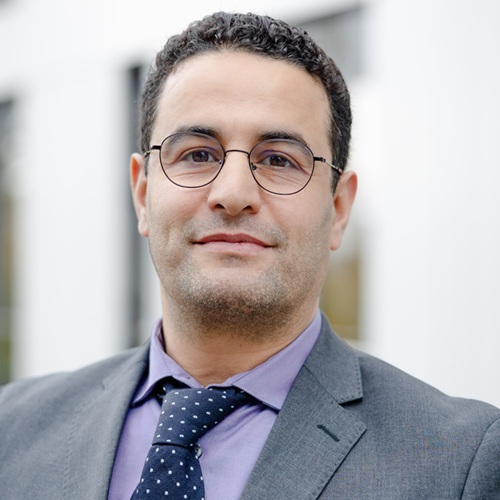
Prof. Dr.
Tarik Taleb
Ruhr University Bochum, Germany

Prof. Dr.
Marko Jäntti
University of Eastern Finland, Finland
Participate
If you want to get involved beyond submitting an article, please consider organizing a workshop, a thematic session, or a demo. Details are available on the Event Satellites page.
- Call For Papers
The rapid advancements in Artificial Intelligence (AI) and digital transformation are revolutionizing the landscape of networking and communications. The proliferation of AI technologies has paved the way for smarter, more efficient networks capable of adapting to the ever-increasing demands of the digital era. From AI-driven network management and optimization to intelligent communication protocols, the integration of AI into networking is transforming how data is transmitted, processed, and utilized. ANFC 2026 explores cutting-edge AI-based solutions that enhance network performance, security, and resilience.
Moreover, the ongoing digital transformation trends are reshaping industries and societies, driving the need for innovative communication technologies. As we transition towards a more connected world, the development of next-generation networks, including 5G, 6G, and beyond, becomes paramount. These advanced networks promise unprecedented speed, low latency, and massive connectivity, enabling a myriad of applications such as IoT, autonomous systems, and immersive experiences.
Professionals from industry, government, and academia, researchers, engineers, practitioners, and students are invited to contribute. ANFC welcomes 1) full papers presenting significant research, development, application, position, or survey, 2) short papers on work-in-progress, 3) posters, 4) contributed talk presentations, as well as workshops, thematic sessions, and demos.
Prospective authors are invited to submit original, unpublished works, which are not under review in any other conference or journal. Topics of interest include, but are not limited to, the following.
Topics
- Network softwarization
- Software-Defined Networking (SDN) and Network Function Virtualization (NFV)
- Advances in 5G New Radio (NR) technologies
- Integration of AI-tools in SDN controllers
- NFV for dynamic network service deployment
- Edge computing for real-time data processing
- Cloud-Fog-Edge computing and its integration with AI-based solutions
- Challenges in deploying massive IoT over 5G networks
- 5G and beyond: Technologies, deployment, and challenges
- Theme: AI-driven Network Monitoring and Management
- Machine learning algorithms for traffic prediction
- AI algorithms for dynamic bandwidth allocation
- Fault detection and isolation using AI
- Service orchestration and Network slicing
- Self-Organizing Networks (SON) with AI support
- IoT manageability
- Cognitive management
- AI in proactive network congestion management
- Predictive maintenance and network fault management using AI
- Autonomous network operations and self-healing networks
- Planning, optimizing, and deploying
- Optimizing mobile resource allocation
- Support for semantic communications
- Accelerating data
- Generative AI-enabled security and privacy
- Content and model cache management
- Generative AI-empowered applications
- Quality of Service (QoS) improvement through user feedback
- Optimization and acceleration communications techniques
- Performance evaluation
- Digital twining and generative-AI for predictive maintenance
- AI-powered Intrusion Detection Systems (IDS)
- Implementing AI for secure IoT environments
- Blockchain for decentralized security solutions
- Cyber threat intelligence using AI
- Privacy-preserving AI techniques for network security
- AI-based threat detection and response systems
- Securing IoT networks and devices
- Blockchain technology for secure communications
- AI for traffic management in smart cities
- IoT sensors for smart infrastructure monitoring
- AI-driven energy management in urban areas
- Role of AI in public safety and emergency response
- Role of AI in smart city infrastructure
- Internet of Things (IoT) and its impact on networking
- Digital twins and their applications in urban planning
- Intelligent urban/household resource/services metering
- AI for resource allocation in data centers
- Optimization of cooling systems using AI
- AI-enabled predictive maintenance in HPC
- Hybrid cloud solutions and AI integration
- Green data center designs and AI applications
- AI-driven data center management and optimization
- Energy-efficient and sustainable data center designs
- Fundamentals of quantum communication technologies
- Quantum Key Distribution (QKD) technologies
- AI for quantum error correction
- Quantum network simulation and modeling with AI
- Interfacing classical and quantum networks
- AI applications in quantum network management
- Future of quantum Internet and AI-tools roles
- Challenges and future directions in quantum networking
- Vehicle-to-Everything (V2X) Communication and AI optimizers
- Coordination and AI-based real-time decision-making autonomous vehicles
- In-Vehicle infotainment integrated systems and AI-based personalized content
- Fleet management systems, AI-routes optimization, and planned maintenance
- Connected car platforms and communication reliability
- Vehicle health monitoring systems through AI-diagnosing
- Telematics systems with AI-based analysis
- Smart traffic management and ML-based predicting traffic patterns
- Electric vehicle (EV) charging networks and AI-based placement optimization
- Vehicle security systems for protection from theft and cyber threats
- AI for Wireless Network Optimization
- Edge AI and Mobile Edge Computing
- Mobility Management in AI-Driven Solutions
- AI in IoT and Mobility Scenarios
- Digital Twins for Wireless Systems
- Machine Learning for Dynamic Spectrum Access
- Intelligent Interference Detection and Cognitive Spectrum Management
- Mobility and Handover Management
- Wireless Challenges 5G/6G networks introduce massive
- AI-enabled Energy-Efficient Networking
- Internet connectivity via satellites and AI for optimizing satellite coverage
- Earth observation and remote sensing for satellite imagery
- Satellite-based IoT networks
- Space-based Navigation Systems
- Satellite constellations for global coverage
- Satellite data processing and analytics
- Inter-Satellite communication networks
- Satellite cybersecurity
- Space-based sensors and monitoring
- Satellite-based emergency communication systems
- Emerging standards for 5G and beyond
- AI-driven approaches for network standardization
- Role of regulatory bodies in AI and networking
- Industry collaboration for setting global standards
- Interoperability challenges and solutions in heterogeneous networks
- Role of industry consortia and regulatory bodies
- AI in enhancing telemedicine through advanced networks
- Smart agriculture with AI-supported IoT
- Autonomous vehicles and AI-enabled V2X communication
- AI applications in remote education networks
- Enhancing VR/AR experiences with AI and advanced networks
- AI-supported telecommunication services and applications
- Use cases of AI in enhancing network performance
- Case studies on digital transformation projects
Instructions for Authors
For more information on the submission process, please consult The Detailed Instructions for Authors.
To submit your work to this event:
- Scientific Board
- Firas Alsehly, Huawei Edinburgh Research Centre, UK
- Emna Ben Slimane, University of Gabes, Tunisia
- Chafika Benzai, Nokia Bell Labs, Finland
- Marilisa Botte, Federico II University of Naples, Italy
- Christos Bouras, University of Patras, Greece
- Francesco Buccafurri, Università di Reggio Calabria, Italy
- Marcos F. Caetano, University of Brasília (UnB), Brazil
- Jiann-Liang Chen, National Taiwan University of Science and Technology, Taiwan
- Marco Di Renzo, Paris-Saclay University – CNRS and CentraleSupelec, Paris, France
- Ersin Elbasi, American University of the Middle East, Kuwait
- Faten Fakhfakh, University of Sfax, Tunisia
- Giancarlo Fortino, University of Calabria, Italy
- Jaafar Gaber, Université Marie et Louis Pasteur, UTBM, CNRS, Institut FEMTO-ST, Belfort, France
- Amirhossein Ghaffari, University of Oulu, Finland
- Javier Gozálvez Sempere, Universidad Miguel Hernández de Elche, Spain
- Sofiane Hamrioui, ESAIP Engineer School – Saint Barthelimy d’Anjou, France
- Go Hasegawa, Tohoku University, Japan
- Kenneth Hopkinson, Air Force Institute of Technology, USA
- Marko Jäntti, University of Eastern Finland, Finland
- Abdellatif Kobbane, ENSIAS | Mohammed V University in Rabat, Morocco
- Hui Li, Xidian University, China
- Pascal Lorenz, University of Haute Alsace, France
- Yuyi Mao, Macau University of Science and Technology, Macau, China
- Weizhi Meng, Lancaster University, UK
- Shintaro Mori, Fukuoka University, Japan
- Surendra Narang, Palo Alto Networks – San Ramon, USA
- Karim M. Nasr, University of Greenwich, UK
- Ranyelson Neres Carvalho, Catholic University of Brasilia, Brazil
- José Neuman de Souza, Federal University of Ceará, Brazil
- Van-Linh Nguyen, National Chung Cheng University, Taiwan
- Cathryn Peoples, Ulster University, UK
- Damian Pablo San Roman Alerigi, EXPEC Advanced Research Center | Aramco, Saudi Arabia
- Ivana Semanjski, Ghent University, Belgium
- Peng Shuping, Huawei Technologies, China
- Young-Joo Suh, POSTECH – Pohang University of Science and Technology, Korea
- Vladimir Sulc, MICRORISC, Jicín, Czech Republic
- Chen Sun, Sony, Beijing, China
- Tarik Taleb, Ruhr University Bochum, Germany
- Theodoros Tsiftsis, University of Thessaly, Greece
- Xianzhi Wang, University of Technology Sydney, Australia
- Ramin Yahyapour, University Goettingen/GWDG, Germany
- Daqing Yun, Harrisburg University, USA
- Submit an Article
Before submitting, please consult The Detailed Instructions for Authors.
To submit your work to this event:
- Event Satellites
If you are interested in organizing a workshop, a thematic session, or a demo within the program of this conference, we are looking forward to hearing from you.
The details for what this entails are available at Event Satellites. The contact information on that page will serve as the starting point with someone ready to answer any questions you may have and to help set up the required logistics.
- Camera Ready
Prepare the camera-ready following these guidelines:
- Ensure the paper is formatted according to the IEEE formatting template. See https://www.ieee.org/conferences/publishing/templates
- Consider all the comments from the reviewers that were sent with your acceptance notification email.
- Do NOT include page numbers or any copyright information.
- The length is 6 pages of text (including figures and references) in the standard IEEE two-column format above, with the possibility of 2 extra pages.
Upload your camera-ready to DTR Society Press here:
- Registration
The registration site will be open at the same time as the notification date.
Details about the registration process are available on the Registration page.
- Publication
All accepted and registered papers (full papers and short/work in progress papers), regardless of presentation mode, will be published in the conference Proceedings under an ISBN reference and included in the Digital Library.
Proceedings: DRT Society Press
Library: DTR Society Digital Library
Accepted and registered Posters and Contributed Talks, regardless of presentation mode, will be posted on the conference webpage.
- Presentation
All accepted and registered contributions are allotted a 25-minute presentation slot in the conference program.
We encourage all authors to attend the conference and present in person whenever possible. We recognize, however, that travel or other circumstances may prevent some presenters from attending the conference physically. Authors who are unable to present in person may request to deliver their presentation live via Zoom.
Please note that in-person sessions at the conference venue will not be streamed. Remote presenters will join their assigned session via Zoom, while attendees at the conference venue will participate in person.
Additional information and instructions for both in-person and Zoom presentations are available on the Presentations page.
- Peer Review
Methodology
All submissions are peer reviewed by three or more reviewers, and evaluated based on relevance, technical content, originality, competence, significance, and presentation.
Reviewers are asked to offer constructive feedback to help the authors improve their work, regardless of whether the submission is accepted or rejected.
Reviewers are expected to adhere to our Conduct Policies.
Notification
Notification of acceptance or rejection will be issued by the evaluation system and sent to the contact author email address.
Rebuttal
Authors have a period for rebuttal of one week after notification. A rebuttal can be filed by contacting us along with the relevant data (conference name, submission number, and reason for rebuttal).
All rebuttals are answered, and the decisions are final.
- Indexing
Most events are at the beginning of their series. Indexing is planned for the coming years, once the events mature and become solid in terms of number of contributions and content.
DTR Society aims to enhance the visibility of all its publications. The proceedings will be submitted to various indexes like Google Scholar, SCOPUS, DBLP, PubMed, HCIBib, EI-Compendex, etc.
- Conference Venue
The conference will take place at:
Mercure Lisboa
AV JOSE MALHOA 23
1099-051 LISBOA
PORTUGAL
Phone: +351 21 720 8089
Email: h3346@accor.com
A group registration form is available.
For more information about the conference venue, please consult the Mercure Lisbon Hotel page we have put together.
- Touristic Information
For places to visit around the conference location, please consult the Lisbon touristic information page.
- Program
| Location Mercure Lisboa Hotel Time zone conversion: https://www.worldtimebuddy.com/ Sunrise and sunset times: https://www.timeanddate.com/sun/portugal/lisbon |
|
On Site Schedule | The schedule of events in Lisbon is available. Please note that there will be updates. |
Tutorial Lectures | T1: Model-based Digital Signal Processing Platforms with AI Integration – On Site Dipl. Eng. Arwen Mannaert, NSX bv, Belgium
|
| T2: Performance Metrics and their Properties: Correctly Evaluating Binary Classifiers – Virtual Prof. Ing. Luigi Lavazza, Università dell’Insubria – Varese, Italy
|
|
Keynote Speeches | K1. Controlling Artificial Intelligence: An NST Perspective – Virtual Prof. Dr. Herwig Mannaert, University of Antwerp, Belgium
|
| K2. On the Integration of Informal Methods into Model-Driven Software Engineering – On Site Prof. Dr. Hans-Werner Shering, NORDAKADEMIE Hochschule der Wirtschaft, Hamburg, Germany
|
|
| K3. Theme: Industry 5.0: Predictive Maintenance and its Economic and Environmental Impact – On Site Speaker: Prof. Dr. Rui Pinto, University of Porto, Portugal
|
|
| K4. Overview of AgriICWSN Project: Information-Centric Wireless Sensor Network for Smart Agriculture – On Site Prof. Dr. Shintaro Mori, Fukuoka University, Japan
|
|
| K5. Engineered Attention: Algorithmic Bias, Persuasive Traps, and the Shaping of Reality on Social Media – Virtual Prof. Dr. Nitin Agarwal, COSMOS, University of Arkansas – Little Rock; ICSI, University of California – Berkeley, USA
|
|
| K6. Beyond the Point Estimate: Tabular Foundation Models and Provable Guarantees for Mission-Critical AI – On Site Prof. Dr. Thomas Zöller, IU International University of Applied Sciences, Germany
|
|
| K7. Preference-Centric Combinatorial Optimization for Multi-Criteria Decision Making – On Site Prof. Dr. Malek Mouhoub, University of Regina, Canada
|
|
| K8. Intelligent but Vulnerable – The Paradox of Digital Transformation – On Site Prof. Dr. Lasse Berntzen, University of South-Eastern Norway, Norway
|
|
| K9. Driving Analyses for Electric Cars: From being Connected to Automated Driving, Focusing on the Challenges of Range, Comfort and Efficiency – On Site Prof. Dr. Oliver Michler, Dresden University of Technology, Dresden (TUD), Germany
|
|
Open Discussions | Open Discussion I – Monday, Nov 2 – On Site Theme: Decision-making and AI-Agentic Guardrails in Critical Services Moderators Prof. Dr. Thomas Zöller, IU International University of Applied Sciences, Germany Dr. Carlos Henrique Duarte, BNDES, Brazil Prof. Dr. Lasse Berntzen, University of South-Eastern Norway, Norway |
| Open Discussion II – Tuesday, Nov 3 – On Site Theme: Progress in Robotics and Digital Services Moderators Prof. Dr. Malek Mouhoub, University of Regina, Canada Dr. Luca Fabbro, APTIV Connection System Service Italia S.p.A., Italy Prof. Dr. Oliver Michler, Dresden University of Technology, Dresden (TUD), Germany |
|
| Open Discussion III – Thursday , Nov 5 – On Site Theme: Information-centric Software and Network Systems Moderators Prof. Dr. Shintaro Mori, Fukuoka University, Japan Prof. Dr. Hans-Werner Shering, NORDAKADEMIE Hochschule der Wirtschaft, Hamburg, Germany |
|
Publications | All published articles (both presented on site or not) will be available in the DTR Society Library once the event concludes. |