

The First International Conference on Security and Cybersecurity in the AI and Digital Context
Porto, Portugal
June 7 - 11, 2026
This event will be held in hybrid mode, with both on site and remote options.
ISSN:
TBA
ISBN:
978-1-68558-449-8
Submission:
March 18, 2026
Notification:
April 9, 2026
Registration:
April 21, 2026
Camera Ready:
April 28, 2026
Submission deadline: March 18, 2026
- At a Glance
In the age of AI and digital technology, cybersecurity is a constantly evolving and adaptive frontier. AI mechanisms increase the ability to detect, predict, and mitigate threats, but they simultaneously expand the attack surface with new vulnerabilities in models, data pipelines, and complex interconnected systems. The speed and sophistication of AI-powered attacks demand equally intelligent, scalable, and resilient defense strategies.
Conference Chairs

Prof. Dr.
Erik Buchmann
ScaDS.AI, Leipzig University, Germany

Prof. Dr.
Jörn-Marc Schmidt
IU International University of Applied Sciences, Germany
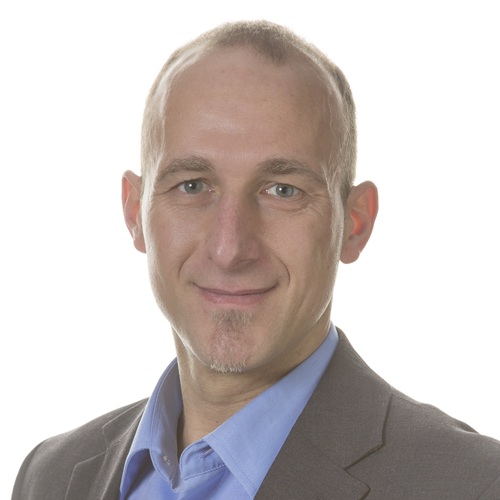
Prof. Dr.
Alexander Lawall
IU International University of Applied Sciences, Germany
Advisory Board
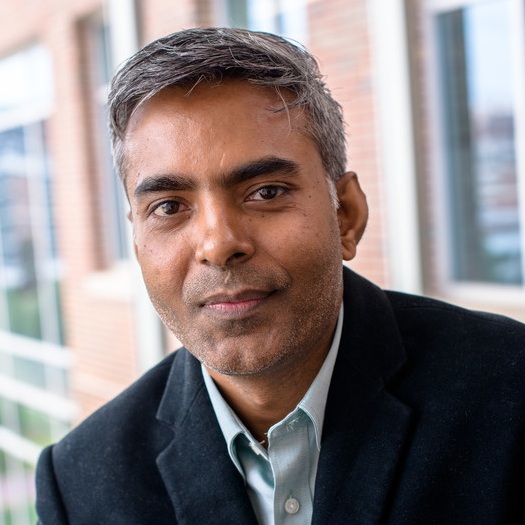
Prof. Dr.
Nitesh Saxena
Texas A&M University (A&M), USA

William Yurcik
Centers for Medicare & Medicaid Services (CMS), USA
Participate
If you want to get involved beyond submitting an article, please consider organizing a workshop, a thematic session, or a demo. Details are available on the Event Satellites page.
- Call For Papers
In the age of AI and digital technology, cybersecurity is a constantly evolving and adaptive frontier. AI mechanisms increase the ability to detect, predict, and mitigate threats, but they simultaneously expand the attack surface with new vulnerabilities in models, data pipelines, and complex interconnected systems. The speed and sophistication of AI-powered attacks demand equally intelligent, scalable, and resilient defense strategies.
In digital and AI era, the event covers security mechanisms intended to protect people, assets, and infrastructures, along with cybersecurity mechanisms defending digital systems, networks, and data, from online threats.
This conference brings together researchers, engineers, security practitioners, and policymakers to address the full spectrum of system security and cybersecurity challenges, from protecting AI models and cloud infrastructures to securing IoT ecosystems, autonomous systems, and human–machine interfaces. With a focus on mechanisms, architectures, and deployable tools, the event aims to accelerate the translation of cutting-edge research into operational defenses.
By fostering interdisciplinary collaboration between AI developers, security specialists, and governance bodies, the conference focuses on practical integration strategies, regulatory harmonization, and the development of a strong security culture. Contributions should not only highlight innovative solutions but also address emerging threats that will shape the future of digital trust.
Professionals from industry, government, and academia, researchers, engineers, practitioners, and students are invited to contribute. CYBERSEC welcomes 1) full papers presenting significant research, development, application, position, or survey, 2) short papers on work-in-progress, 3) posters, 4) contributed talk presentations, as well as workshops, thematic sessions, and demos.
Prospective authors are invited to submit original, unpublished works, which are not under review in any other conference or journal. Topics of interest include, but are not limited to, the following.
Topics
- Phishing awareness and user-training platforms
- Deepfake-enabled social engineering and trust manipulation
- Insider-threat detection via behavioral analytics
- Cross-cultural cybersecurity education and awareness
- Reducing cognitive overload for analysts and SOC operators
- AI-driven operator decision-support tools, e.g., SIEM enrichment with AI-based correlation engines
- (Real-time) AI-based anomaly detection, e.g., in phishing, emails, and network traffic
- Malware distribution, sandboxing, and behavioral profiling
- Ransomware resilience (e.g., immutable backups, rapid restoration)
- DoS/DDoS reduction via adaptive traffic analysis
- Adversarial ML, model poisoning, dataset integrity monitoring
- (Generative) AI for simulating cyberattack scenarios
- Reducing false positives in AI-powered detection systems
- Social engineering awareness (voice/text deepfake detection, identity validation, etc.)
- Critical infrastructure sabotage (redundancy, prediction, anomaly detection, etc.)
- Unauthorized personal data collection and tracking
- Re-identification risks in pseudonymized and anonymized datasets
- Surveillance overreach and ethical workplace monitoring
- AI transparency, fairness, bias mitigation, and explainability
- Multi-jurisdictional AI compliance and cross-border data transfers
- AI-enhanced multi-factor and passwordless authentication
- Behavioral biometrics for continuous identity verification
- Zero-trust identity strategies for distributed workforces
- Decentralized identity (DID/Blockchain) for secure credentials
- Adaptive, risk-scored, and automated access control
- Protection of training datasets from poisoning attacks
- Model watermarking/fingerprinting for IP protection
- Verifiable inference in untrusted environments
- Preventing model theft, inversion, and reconstruction attacks
- Lightweight cryptography for constrained IoT devices
- Secure firmware updates across limited/remote networks
- Industrial IoT anomaly detection and SCADA/ICS protection
- Zero-trust architectures for IoT ecosystems
- Sensor data integrity, provenance, and energy-efficient security
- Secure SDLC practices and automated code analysis
- API security testing, monitoring, and exploitation prevention
- CI/CD pipeline protection and code verification
- Open-source dependency risk assessment (e.g., SBOM)
- Supplier risk scoring and component authenticity verification
- AI-driven incident triage, containment, and orchestration
- Forensics in AI-enabled environments (timeline reconstruction, KG-based RCA)
- Cyber resilience metrics, e.g., for AI-supported infrastructures, maturity index calculations
- Disaster recovery planning, e.g., using predictive analytics
- Governance, regulation, and standards for AI-security integration
- AI-assisted RF/signal intelligence for anomaly detection
- Jamming detection and adaptive frequency-hopping security
- Detecting covert communication channels
- Cyber-electronic warfare convergence and defense frameworks
- Digital battlefield simulation with AI-enhanced modeling
Instructions for Authors
For more information on the submission process, please consult The Detailed Instructions for Authors.
To submit your work to this event:
- Scientific Board
- Sharif Abuadbba, CSIRO’s Data61, Australia
- Erik Buchmann, ScaDS.AI, Leipzig University, Germany
- Berkay Celik, Purdue University, USA
- Janne Merete Hagen, University of Oslo, Norway
- Rakibul Hasan, Arizona State University, USA
- Panayiotis (Panos) Kotzanikolaou, University of Piraeus, Greece
- Alexander Lawall, IU International University of Applied Sciences, Germany
- Bo Li, University of Chicago, USA
- Thomas Richard McEvoy, Norwegian University of Science and Technology (NTNU), Norway
- Pablo Moriano, Oak Ridge National Laboratory, USA
- Simin Nadjm-Tehrani, Linköping University, Sweden
- Yuhong Nan, Sun Yat-Sen University, China
- Jan Pelzl, Hamm-Lippstadt University of Applied Sciences, Germany
- David Pape, CISPA Helmholtz Center for Information Security, Germany
- Peter T. Popov, Centre for Software Reliability, City University London, UK
- Nitesh Saxena, Texas A&M University (A&M), USA
- Jörn-Marc Schmidt, IU International University of Applied Sciences, Germany
- Catarina Silva, University of Aveiro, Portugal
- Ananta Soneji, Arizona State University, USA
- Christoph Stach, Institute for Parallel and Distributed Systems (IPVS), University of Stuttgart, Germany
- Gang Tan, Pennsylvania State University, USA
- Roger Tilley, Sandia National Laboratories, Livermore, CA, USA
- William Yurcik, Centers for Medicare & Medicaid Services (CMS), USA
- Submit an Article
Before submitting, please consult The Detailed Instructions for Authors.
To submit your work to this event:
- Event Satellites
If you are interested in organizing a workshop, a thematic session, or a demo within the program of this conference, we are looking forward to hearing from you.
The details for what this entails are available at Event Satellites. The contact information on that page will serve as the starting point with someone ready to answer any questions you may have and to help set up the required logistics.
- Camera Ready
Prepare the camera-ready following these guidelines:
- Ensure the paper is formatted according to the IEEE formatting template. See https://www.ieee.org/conferences/publishing/templates
- Consider all the comments from the reviewers that were sent with your acceptance notification email.
- Do NOT include page numbers or any copyright information.
- The length is 6 pages of text (including figures and references) in the standard IEEE two-column format above, with the possibility of 2 extra pages.
Upload your camera-ready to DTR Society Press here:
- Registration
The registration site will be open at the same time as the notification date.
Details about the registration process are available on the Registration page.
- Publication
All accepted and registered papers (full papers and short/work in progress papers), regardless of presentation mode, will be published in the conference Proceedings under an ISBN reference and included in the Digital Library.
Proceedings: DRT Society Press
Library: DTR Society Digital Library
Accepted and registered Posters and Contributed Talks, regardless of presentation mode, will be posted on the conference webpage.
- Presentation
All accepted and registered contributions are allotted a presentation slot of 25 minutes in the conference program.
We encourage everyone to attend the conference and present in person, but we recognize that this may not always be feasible. Authors who are unable to attend physically have the option to send their presentation slides in advance to be posted online. If a prerecorded presentation video is provided, it will also be made available.
Authors who will present in person at the conference location also have the option to send their presentation slides to be posted.
The in-person sessions from the conference location will not be streamed.
For additional instructions on preparing the presentation slides and optional video, please see the Presentations page.
- Peer Review
Methodology
All submissions are peer reviewed by three or more reviewers, and evaluated based on relevance, technical content, originality, competence, significance, and presentation.
Reviewers are asked to offer constructive feedback to help the authors improve their work, regardless of whether the submission is accepted or rejected.
Reviewers are expected to adhere to our Conduct Policies.
Notification
Notification of acceptance or rejection will be issued by the evaluation system and sent to the contact author email address.
Rebuttal
Authors have a period for rebuttal of one week after notification. A rebuttal can be filed by contacting us along with the relevant data (conference name, submission number, and reason for rebuttal).
All rebuttals are answered, and the decisions are final.
- Indexing
Most events are at the beginning of their series. Indexing is planned for the coming years, once the events mature and become solid in terms of number of contributions and content.
DTR Society aims to enhance the visibility of all its publications. The proceedings will be submitted to various indexes like Google Scholar, SCOPUS, DBLP, PubMed, HCIBib, EI-Compendex, etc.
- Conference Venue
The conference will take place at:
Hotel Novotel Porto Gaia
Rua Martir Sao Sebastiao, Afurada,
4400-499 Vila Nova de Gaia
Phone: +351 22 772 8700
Email: h1050@accor.com
A group registration form will be available.
For more information about the conference venue, please consult the Hotel Novotel Porto Gaia page we have put together.
- Touristic Information
For places to visit around the conference location, please consult the Porto touristic information page.
- Program
| Location Hotel Novotel Porto Gaia Rua Martir Sao Sebastiao, Afurada, 4400-499 Vila Nova de Gaia Time zone conversion: https://www.worldtimebuddy.com/ Sunrise and sunset times: https://meteogram.org/sun/portugal/porto/ |
|
Photos | Photos from the event will be available after the event concludes. |
On Site Schedule | The schedule of events in Porto is available. Please note that there will be updates. |
Tutorial Lectures | T1: Barriers to AI Adoption in Education and How We Overcame Them: The MIKKO Case Study – On Site Mykhailo Kalitkin, Co-Founder, CEO, UNOWA, Portugal
|
Keynote Speeches | K1: Reliable Intrusion Detection of Zero-Day Attacks: A Two-Stage Architecture Combining Deep Learning and Conformal AI – On Site Prof. Dr. Alexander Lawall, IU International University of Applied Sciences, Germany
|
| K2. From Biosignals to Clinical Decisions – What we Have Done, and What we Must do? – On Site Prof. Dr. Nuno Garcia, University of Lisbon, Portugal
|
|
| K3. Fighting Fire with Fire: Developing AI-enhanced Methodologies to Combat AI-enhanced Cognitive Threats – Virtual Prof. Dr. Nitin Agarwal, COSMOS Research Center, University of Arkansas at Little Rock; ICSI, University of California, Berkeley, USA
|
|
| K4. Rapid Innovation & Operationalization – Virtual Dr. Steve Chan, Decision Engineering Analysis Laboratory, USA
|
|
| K5. Using AI for threat modeling in the context of 6G and IPS – Virtual Prof. Dr. Wesley dos Reis Bezerra, Federal University of Santa Catarina, Brazil
|
|
| K6. AI-driven Digital Technologies for Crisis Management – On Site Prof. Dr. Ivan Ganchev, University of Limerick, Ireland & University of Plovdiv “Paisii Hilendarski”, Bulgaria
|
|
| K7. TBD – Virtual Prof. Dr. Andreas L. Symeonidis, Aristotle University of Thessaloniki, Greece
|
|
Panels | Panel #1 – Monday, June 8 Theme: Challenges and Costs on Robust and Cyber-protected Systems – On Site Moderator: Prof. Dr. Erik Buchmann, ScaDS.AI Dresden/Leipzig, Germany Panelists: Prof. Dr. Alexander Lawall, IU International University of Applied Sciences, Germany Viktoriia Vovchenko, Bielefeld University of Applied Sciences and Arts, Germany Prof. Dr techn. Jörn-Marc Schmidt, IU International University of Applied Science, Germany |
| Panel #2 – Tuesday, June 9 Theme: Education and New Societal Trends – On Site Moderator: Prof. Dr techn. Jörn-Marc Schmidt, IU International University of Applied Science, Germany Panelists: Mykhailo Kalitkin, Co-Founder, CEO, UNOWA, Poland Student Tomás Matos, Universidade de Aveiro, Portugal Andrew White, CMO, UNOWA, Poland |
|
| Panel #3 – Wednesday, June 10 Theme: Edge-Cloud Computing Continuum – On Site Moderator: Prof. Dr. Rossitza Goleva, New Bulgarian University – Sofia, Bulgaria Panelists: Prof. Dr. Nuno Garcia, University of Lisbon, Portugal Prof. Dr. Erik Buchmann, ScaDS.AI Dresden/Leipzig, Germany Prof. Dr. Ivan Ganchev, University of Limerick, Ireland & University of Plovdiv “Paisii Hilendarski”, Bulgaria |
|
Open Discussions | Open Discussion #1 – Tuesday, June 9 Theme: Trends on Adopting AI and Digital Technologies – On Site Coordinators: Mykhailo Kalitkin, Co-Founder, CEO, UNOWA, Poland Andrew White, CMO, UNOWA, Poland |
Publications | All published articles (both presented on site or not) and presentation materials will be available in the DTR Society Library once the event concludes. |