

The First International Conference on Human and AI Media Creativity and Creativeness Continuum
- From Human Knowledge → Creativity → Creativeness → Media Expression → Innovation → to Value Creation -
Barcelona, Spain
November 14 - 18, 2027
This event will be held in hybrid mode, with both on site and remote options.
ISSN:
TBA
ISBN:
978-1-68558-588-4
Submission:
July 15, 2027
Notification:
August 23, 2027
Registration:
September 2, 2027
Camera Ready:
September 9, 2027
Submission deadline: July 15, 2027
- At a Glance
The International Conference on Human and AI Media Creativity and Creativeness Continuum explores creativity as a continuum that begins with human imagination and extends through media expression, technological enablement, audience interaction, and societal impact. It examines the mechanisms that generate ideas, the media that transform them into experiences, and the emerging ecosystems where humans and intelligent technologies collaborate in the creation of cultural, scientific, educational, and economic values.
The event naturally accommodates communities from cognition and psychology, education, arts and humanities, communication and media studies, digital content creation, entertainment industries, human-computer interaction, AI-assisted creativity, and innovation and entrepreneurship.
Conference Chairs
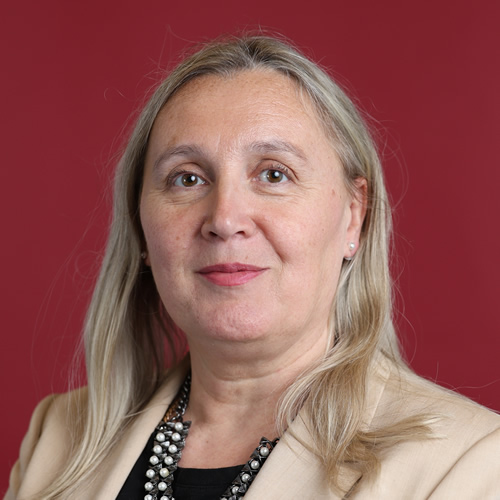
Prof. Dr.
Christelle Scharff
Pace University, USA
Advisory Board
(to be announced)
Participate
If you want to get involved beyond submitting an article, please consider organizing a workshop, a thematic session, or a demo. Details are available on the Event Satellites page.
- Call For Papers
Creativity is originally associated with human capability. It enables people to imagine new possibilities, discover original solutions, and express ideas in meaningful ways. Throughout history, creativity has shaped science, technology, culture, education, business, and society. Today, creative activities are increasingly taking place within rich media environments. Ideas are no longer confined to paper, speech, or physical artifacts. They are communicated through digital content, interactive platforms, immersive experiences, and global communication networks.
Media has become powerful enablers of creativity. They support the creation, transformation, dissemination, and preservation of knowledge and creative works as a continuum. New technologies provide useful opportunities for collaboration, experimentation, and audience participation and immersion. At the same time, they raise important questions about authenticity, ownership, trust, ethics, and the evolving relationship between human creators and intelligent tools. Understanding this interplay between human creativity and media ecosystems has become essential for researchers, practitioners, educators, artists, and innovators.
This conference explores creativity and creativeness from both human and media continuum perspectives. It examines how ideas emerge, how they are expressed through different forms of media, and how they generate value for individuals, organizations, and society. The event brings together experts from diverse disciplines to discuss creative thinking, storytelling, content production, digital media, human-machine collaboration, and future creative ecosystems. By encouraging cross-disciplinary dialogue, the conference aims to advance our understanding of how human imagination and media technologies can work together to support innovation, communication, cultural development, and societal progress.
Topics
- Cognitive foundations of creativity
- Imagination, intuition, and insight generation
- Heuristics and creative problem solving
- Divergent and convergent thinking processes
- Knowledge recombination and idea emergence
- Individual and collective creativity
- Learning and creative development
- Creativity under uncertainty and constraints
- Measuring creative processes and outcomes
- Assessing and measuring creativity
- Narrative design and storytelling techniques
- Creative writing and content authoring
- Visual communication and creative expression
- Multimedia storytelling and audience experience
- Cross-cultural creative communication
- Creativity in childhood and adolescence
- Educational approaches for creative thinking
- Lifelong learning and creative growth
- Collaborative learning and collective creativity
- Emotion, meaning, and creative engagement
- Interactive and participatory storytelling
- Creative expression in digital environments
- Barriers and enablers of creative development
- Future skills and creative competencies
- Film, animation, and video creativity
- Music, sound, and audio innovation
- Digital media production workflows
- Immersive, virtual, and mixed-reality media
- Virtual production and synthetic environments
- Creative media technologies and platforms
- AI-assisted media production
- Human-machine co-creation in media
- Human – AI co-creation processes
- Emerging tools for creative professionals
- Creativity in organizations and teams
- Innovation and creative problem solving
- Social media creativity and content ecosystems
- Creator economies and digital entrepreneurship
- Creativity in marketing and brand communication
- Community-driven creative production
- Collaborative and crowdsourced creativity
- Innovation and value generation through media
- Creative industries and digital transformation
- Audience participation and co-creation
- Social innovation and community transformation
- Creative leadership and organizational culture
- Creativity for sustainable development
- Transformative creativity (business, education, society, personal)
- Scientific discovery and hypothesis generation
- Engineering creativity and inventive design
- Innovation methodologies and technology transfer
- Creative problem solving in complex systems
- Bio-inspired and nature-inspired innovation
- Cross-disciplinary knowledge fusion
- Experimental exploration and rapid prototyping
- Emerging technologies as creativity amplifiers
- Human-AI co-creativity and collaboration
- AI-based tools as creativity amplifiers
- Creativity in hybrid human-machine systems
- Digital environments for creative expression
- Ethics of AI-supported creativity
- Human originality and machine generation
- Creativity versus conceptualization and curation
- Perfection paradox on AI-facilitated productions
- Trust, ownership, and creative authorship
- Future models of human creativity
- Creative ideas, virtual reality games, avatars (as produced characters)
- Creative brand design and marketing
- Creative problem solving, design artifacts
- Creative data visualization and generative media
- Creative newsrooms workflows
- Creative interactive computing
- Creative media value chains
- Creative ideas, virtual reality games, avatars (as produced characters)
- Creative actor (role / performer as a creative agent)
- Creative skills, mindsets, organizational culture
- Creative immersion spaces
- Creative persona
- Creative expression of behavioral feelings and emotions
- Creative brands design (when seen as capability, not artifact)
- Creative autonomy and constraints management
- Creative cognitive diversity and resilience
- Creativity, boredom, and digital overstimulation
- Creative resilience and mental curation
- Human originality and machine-generated creativity
- Authenticity and provenance of creative content
- Synthetic authenticity and indistinguishability
- Bias and fairness of using AI in media
- Artistic hallucinations and creativeness
- Privacy concerns and data protection in media AI
- Intellectual property and creative ownership
- Ethics of AI-enabled creativity
- Diversity and inclusion in creative ecosystems
- Trust and transparency in digital media
- Creativity for social good and sustainability
- Regulatory frameworks for AI in media
- Case studies on ethical AI deployment in media
- Future human-media creative ecosystems
Instructions for Authors
For more information on the submission process, please consult The Detailed Instructions for Authors.
To submit your work to this event:
- Scientific Board
(to be announced)
- Submit an Article
Before submitting, please consult The Detailed Instructions for Authors.
To submit your work to this event:
- Event Satellites
If you are interested in organizing a workshop, a thematic session, or a demo within the program of this conference, we are looking forward to hearing from you.
The details for what this entails are available at Event Satellites. The contact information on that page will serve as the starting point with someone ready to answer any questions you may have and to help set up the required logistics.
- Camera Ready
Prepare the camera-ready following these guidelines:
- Ensure the paper is formatted according to the IEEE formatting template. See https://www.ieee.org/conferences/publishing/templates
- Consider all the comments from the reviewers that were sent with your acceptance notification email.
- Do NOT include page numbers or any copyright information.
- The length is 6 pages of text (including figures and references) in the standard IEEE two-column format above, with the possibility of 2 extra pages.
Upload your camera-ready to DTR Society Press here:
- Registration
The registration site will be open at the same time as the notification date.
Details about the registration process are available on the Registration page.
- Publication
All accepted and registered papers (full papers and short/work in progress papers), regardless of presentation mode, will be published in the conference Proceedings under an ISBN reference and included in the Digital Library.
Proceedings: DRT Society Press
Library: DTR Society Digital Library
Accepted and registered Posters and Contributed Talks, regardless of presentation mode, will be posted on the conference webpage.
- Presentation
All accepted and registered contributions are allotted a 25-minute presentation slot in the conference program.
We encourage all authors to attend the conference and present in person whenever possible. We recognize, however, that travel or other circumstances may prevent some presenters from attending the conference physically. Authors who are unable to present in person may request to deliver their presentation live via Zoom.
Please note that in-person sessions at the conference venue will not be streamed. Remote presenters will join their assigned session via Zoom, while attendees at the conference venue will participate in person.
Additional information and instructions for both in-person and Zoom presentations are available on the Presentations page.
- Peer Review
Methodology
All submissions are peer reviewed by three or more reviewers, and evaluated based on relevance, technical content, originality, competence, significance, and presentation.
Reviewers are asked to offer constructive feedback to help the authors improve their work, regardless of whether the submission is accepted or rejected.
Reviewers are expected to adhere to our Conduct Policies.
Notification
Notification of acceptance or rejection will be issued by the evaluation system and sent to the contact author email address.
Rebuttal
Authors have a period for rebuttal of one week after notification. A rebuttal can be filed by contacting us along with the relevant data (conference name, submission number, and reason for rebuttal).
All rebuttals are answered, and the decisions are final.
- Indexing
Most events are at the beginning of their series. Indexing is planned for the coming years, once the events mature and become solid in terms of number of contributions and content.
DTR Society aims to enhance the visibility of all its publications. The proceedings will be submitted to various indexes like Google Scholar, SCOPUS, DBLP, PubMed, HCIBib, EI-Compendex, etc.
- Conference Venue
The conference will take place at:
NOVOTEL BARCELONA CORNELLÀ
Avenida Maresme 78
08940, CORNELLA DE LLOBREGAT
BARCELONA
Phone: +34 934 74 70 00
Email: H3667@accor.com
For more information about the conference venue, please consult the Novotel Barcelona Cornella page we have put together.
- Touristic Information
For places to visit around the conference location, please consult the Barcelona touristic information page.
- Program
| Location NOVOTEL BARCELONA CORNELLÀ Day 1: Sunday, November 14 |
||
| Time | Conference Room #1 | |
| 12:00 – End of Day | Participant Registration | |
| Invited Speeches | ||
| 19:00 – 20:00 | Welcome Reception | |
| Day 2: Monday, November 15 | ||
| Time | Conference Room #1 | Conference Room #2 |
| 09:15 – 09:30 | Opening Remarks | |
| 09:30 – 10:30 | Invited Speech | |
| 10:30 – 11:00 | Morning Break | |
| 11:00 – 12:30 | Presentations Session | Presentations Session |
| 12:30 – 14:00 | Lunch | |
| 14:00 – 15:30 | Presentations Session | Presentations Session |
| 15:30 – 16:00 | Afternoon Break | |
| 16:00 – 17:30 | Presentations Session | Presentations Session |
| 20:00 – 22:00 | Social Dinner | |
| Day 3: Tuesday, November 16 | ||
| Time | Conference Room #1 | Conference Room #2 |
| 09:30 – 10:30 | Invited Speech | |
| 10:30 – 11:00 | Morning Break | |
| 11:00 – 12:30 | Presentations Session | Presentations Session |
| 12:30 – 14:00 | Lunch | |
| 14:00 – 15:30 | Presentations Session | Presentations Session |
| 15:30 – 16:00 | Afternoon Break | |
| 16:00 – 17:30 | Presentations Session | Presentations Session |
| Day 4: Wednesday, November 17 | ||
| Time | Conference Room #1 | Conference Room #2 |
| 09:30 – 10:30 | Invited Speech | |
| 10:30 – 11:00 | Morning Break | |
| 11:00 – 12:30 | Presentations Session | Presentations Session |
| 12:30 – 14:00 | Lunch | |
| 14:00 – 15:30 | Presentations Session | Presentations Session |
| 15:30 – 16:00 | Afternoon Break | |
| 16:00 – 17:30 | Presentations Session | Presentations Session |
| Day 5: Thursday, November 18 | ||
| Time | Conference Room #1 | |
| 09:30 – 10:30 | Invited Speech | |
| 10:30 – 11:00 | Morning Break | |
| 11:00 – 12:30 | Presentations Session | |
| 12:30 – 14:00 | Lunch | |
| 14:00 – 15:30 | Presentations Session | |
| 15:30 – 16:00 | Closing Remarks | |