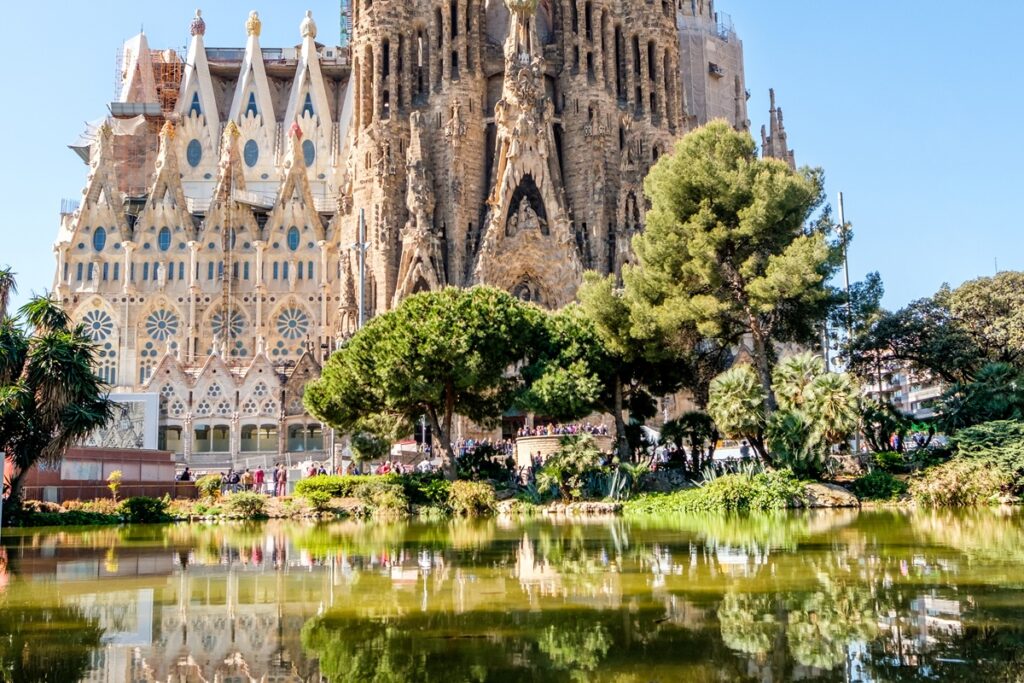

Barcelona
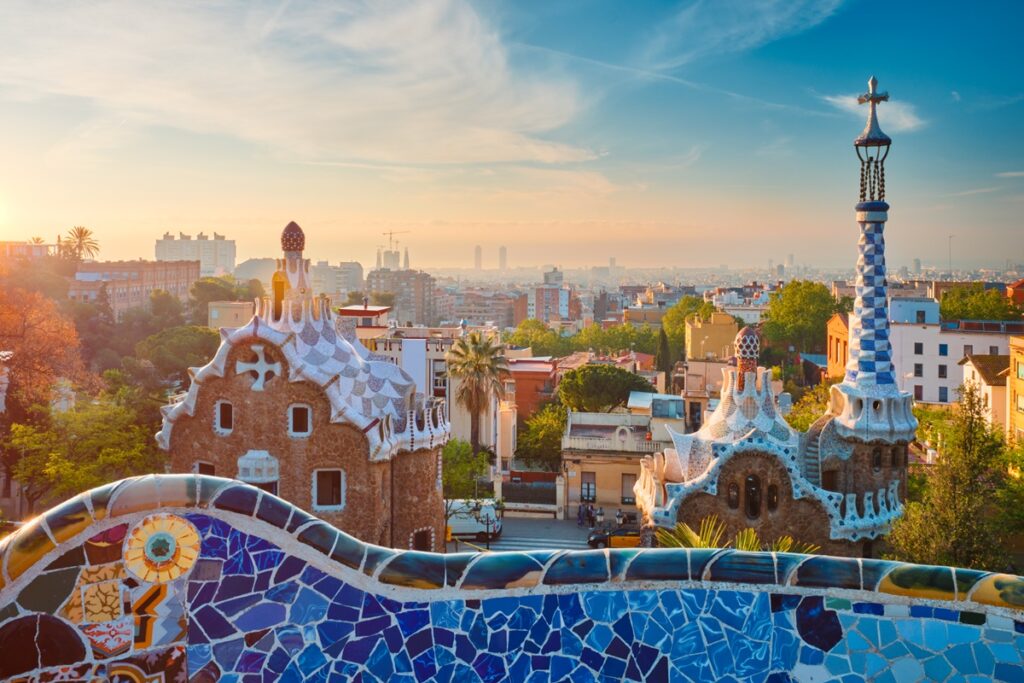
Guell Park View
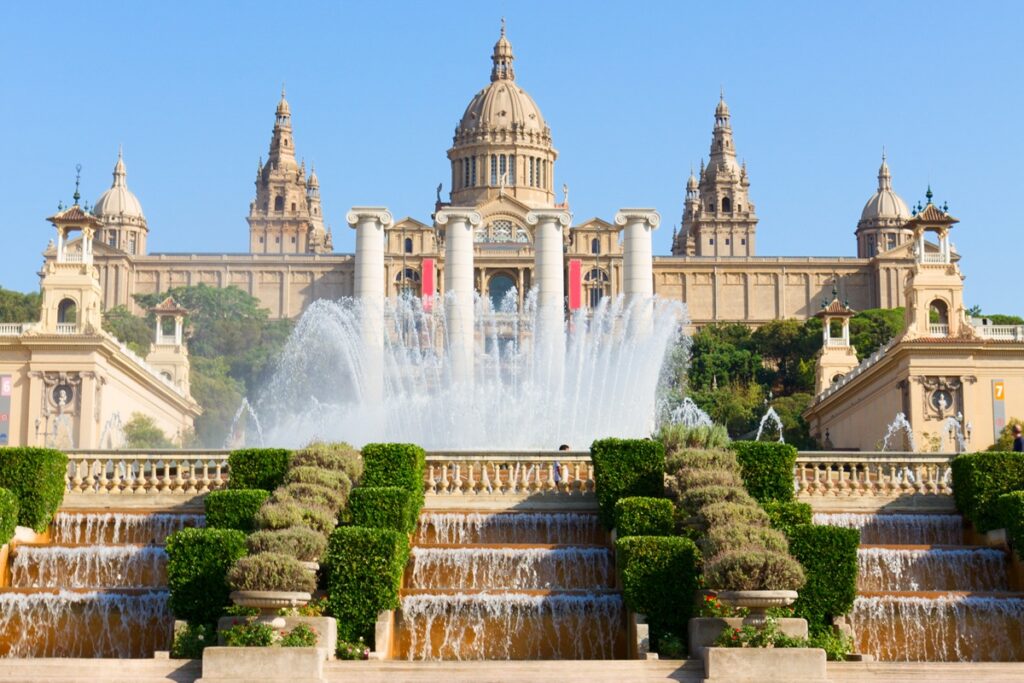
Square of Spain
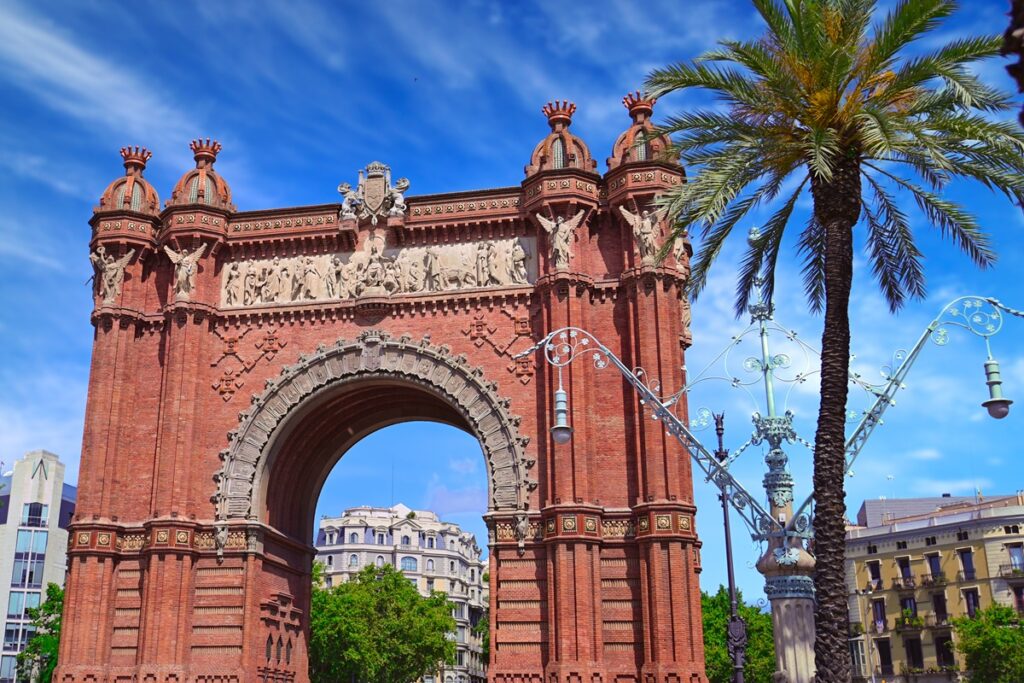
Arc de Triomf
Barcelona
Barcelona is one of those cities that seems to have a little bit of everything without feeling completely overwhelmed by its own attractions. It sits right on the Mediterranean, so you can spend the morning wandering through old streets and admiring historic buildings and the afternoon sitting by the beach with a drink. The city has a lively, relaxed energy that makes it easy to explore on foot, especially in neighborhoods where you can turn down a side street and stumble across a small café, plaza, or interesting shop.
One of Barcelona’s biggest draws is its architecture, particularly the work of Antoni Gaudí. The Sagrada Família is obviously the star attraction, and seeing it in person is quite different from simply looking at photographs. Park Güell and Casa Batlló are also worth visiting, especially if you enjoy unusual buildings and imaginative designs. Even outside the major sights, Gaudí’s influence gives parts of the city a distinctive character that you don’t really find anywhere else.
The older parts of Barcelona are equally enjoyable. The Gothic Quarter is full of narrow streets, old stone buildings, small squares, and hidden corners that invite you to wander without much of a plan. Nearby, La Rambla is much more crowded and touristy, but it is still an iconic part of the city. For a more local atmosphere, neighborhoods such as El Born and Gràcia offer plenty of cafés, restaurants, independent stores, and places to sit and watch everyday life unfold.
Food is another major part of the Barcelona experience. Tapas, fresh seafood, Catalan specialties, and simple dishes made with good local ingredients are easy to find, although the best meals are not necessarily on the busiest tourist streets. It is worth taking some time to explore smaller restaurants and markets rather than trying to check off every famous food spot. Barcelona also has a strong café and nightlife culture, so there is usually something happening well into the evening.
Perhaps the best thing about Barcelona is that it doesn’t require a rigid sightseeing schedule. You can certainly spend your days visiting famous landmarks, but some of the most enjoyable moments come from simply walking around, stopping for coffee, sitting in a sunny plaza, or watching the city come alive at night. It is a destination with plenty to see, but it also rewards slowing down and experiencing the atmosphere rather than treating the trip like a checklist.
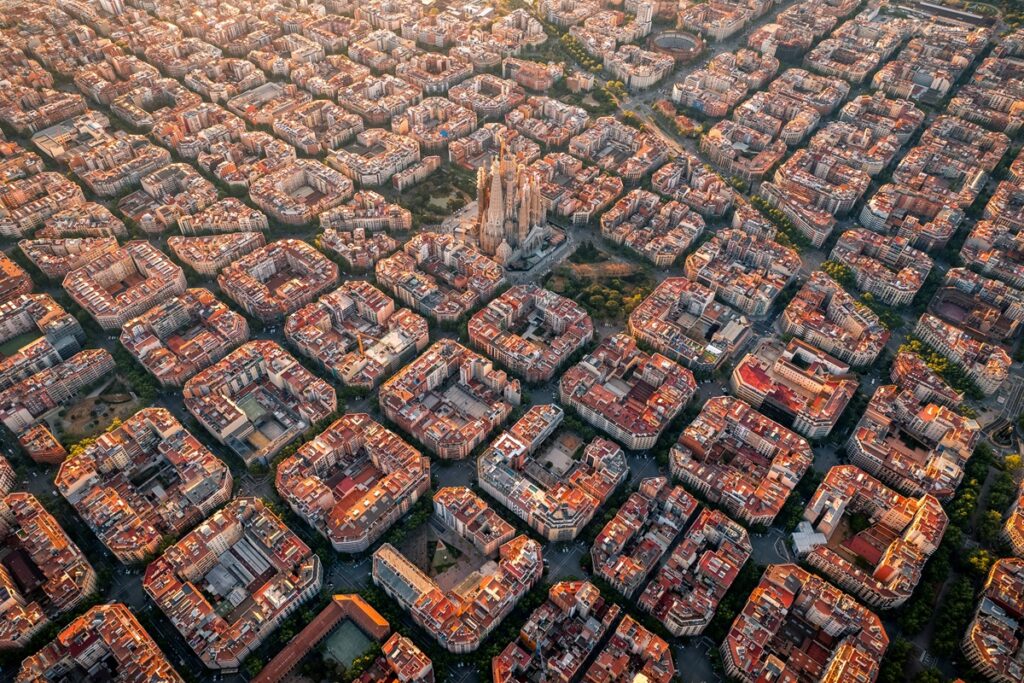
Eixample District
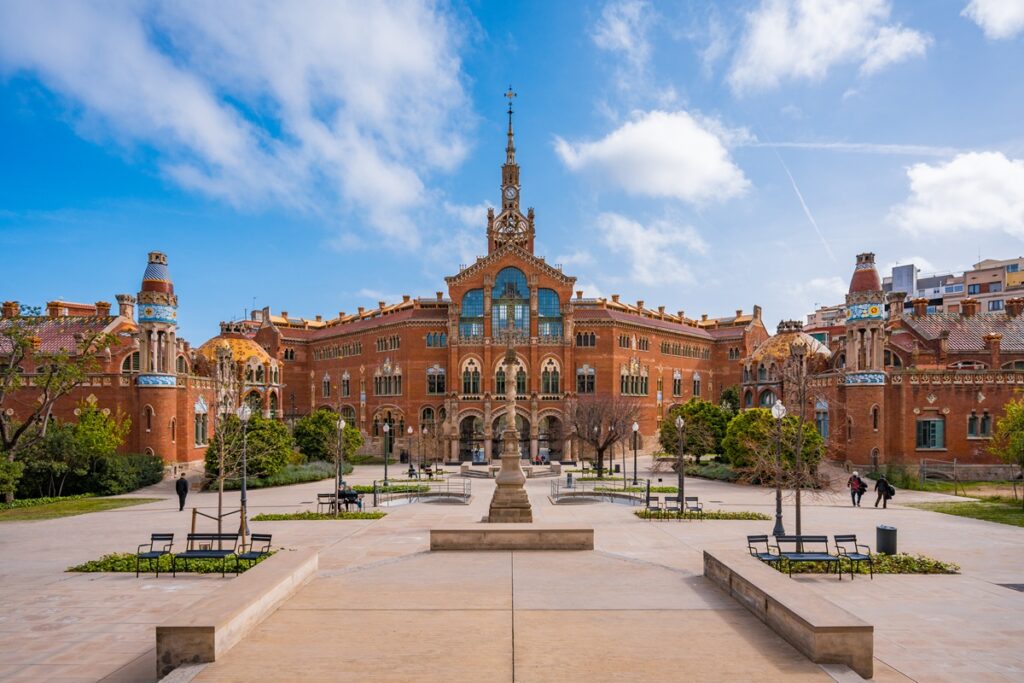
Holy Cross and Saint Paul Hospital
Weather
The weather is pleasant all year round, never reaching below freezing even during the coldest time of the year.
| Month | Min. Temperature | Max. Temperature |
|---|---|---|
| January | 6C / 42F | 13C / 56F |
| February | 6C / 43F | 14C / 58F |
| March | 8C / 47F | 17C / 62F |
| April | 11C / 51F | 18C / 65F |
| May | 14C / 57F | 22C / 71F |
| June | 18C / 64F | 26C / 78F |
| July | 21C / 69F | 28C / 83F |
| August | 21C / 70F | 29C / 84F |
| September | 18C / 64F | 26C / 79F |
| October | 14C / 58F | 22C / 72F |
| November | 9C / 49F | 18C / 64F |
| December | 6C / 43F | 14C / 58F |
Other Cities Within Reach
There are several cities within travel distance of Barcelona.
Sitges is probably the easiest and most relaxed choice. This small coastal town is known for its beaches, whitewashed old streets, seaside promenade, and a lively arts and cultural scene. The old town rises around the Church of Sant Bartomeu i Santa Tecla, giving the waterfront a particularly picturesque appearance. It is a nice place to spend a few hours simply walking around, having lunch by the sea, and perhaps visiting one of its small museums. By car, Sitges is roughly 40–50 minutes from central Barcelona, depending on traffic, and it is even easier by train, with regular services taking around 35–40 minutes.
Just outside Barcelona, Sant Cugat del Vallès feels surprisingly removed from the bustle of the capital. Its main attraction is the Royal Monastery of Sant Cugat, a beautifully preserved medieval complex with an especially impressive Romanesque cloister. Around it is a pleasant historic center filled with cafés, restaurants, and small shops, making it an easy place to combine sightseeing with a leisurely lunch. The town is only about 30 minutes by car from central Barcelona, so it works particularly well if you don’t want to spend most of your day traveling. It is also connected to Barcelona by the FGC railway, making it a convenient option even without a car.
Vilafranca del Penedès is a good choice for visitors who want to see a different side of Catalonia—one centered on vineyards, food, and wine rather than beaches or monumental architecture. The town is the heart of the Penedès wine region and is particularly associated with cava and Catalan winemaking. Its historic center has attractive old buildings and pleasant squares, but the real appeal is getting out into the surrounding countryside and visiting a winery or vineyard. By car, it generally takes about 45–50 minutes from Barcelona, while the regional train makes the journey in roughly 45 minutes.
Terrassa is a slightly more unconventional choice, but it has some fascinating attractions for anyone interested in history and architecture. The town grew into an important industrial center, and remnants of that past can still be seen alongside medieval and modernist buildings. One of the highlights is the Seu d’Ègara, a remarkable group of historic churches whose origins go back many centuries. Terrassa is also home to several buildings associated with Catalan Modernisme, giving visitors a chance to see architecture beyond the more famous Gaudí landmarks in Barcelona. It is around 35–45 minutes by car, making it an easy half-day excursion.
Mataró offers a more everyday version of the Catalan Mediterranean than the heavily touristed beaches of Barcelona. It is a medium-small coastal city with a long history, attractive beaches, a pleasant waterfront, and several interesting examples of Modernista architecture. One of its architectural highlights is Casa Coll i Regàs, designed by Josep Puig i Cadafalch, one of the major figures of Catalan Modernisme. Mataró is roughly 40–50 minutes by car from Barcelona, following the coast northward, and the drive itself is fairly straightforward. It is a good option if you’d like somewhere that feels like a real working Catalan city rather than a destination built primarily around tourism.
- Cardona is the most ambitious choice on this list, but also arguably the most memorable. Its medieval castle and fortified hilltop town rise dramatically above the surrounding countryside, and the town has an unusually strong connection to Catalonia’s medieval history. The Cardona Castle complex includes the impressive Collegiate Church of Sant Vicenç, while the nearby salt mountain offers another unusual attraction. It is roughly 1 hour 15 minutes by car in normal conditions. Cardona feels much more like a genuine excursion and gives you a very different experience from Barcelona.