

The First International Conference on Recognition Systems and Technologies
- Models, Methods, Engineering, and Applications -
Barcelona, Spain
November 14 - 18, 2027
This event will be held in hybrid mode, with both on site and remote options.
ISSN:
TBA
ISBN:
978-1-68558-586-0
Submission:
July 15, 2027
Notification:
August 23, 2027
Registration:
September 2, 2027
Camera Ready:
September 9, 2027
Submission deadline: July 15, 2027
- At a Glance
The International Conference on Recognition Systems and Technologies aims at presenting advances in recognition models, engineering methodologies, architectures, systems, and applications. It covers themes from computer vision, signal processing, sensor technologies, machine learning, semantic reasoning, and intelligent systems engineering, leading to the next generation of recognition systems capable of supporting reliable, context-aware, and human-centered decision making.
There are several critical bottlenecks that remain unaddressed across the research landscape that are addressed by the RECOG series, such as contextual edge decay, semantic ambiguity, data scarcity, cross-modal synchronization, and vulnerability to adversarial attacks.
Conference Chairs
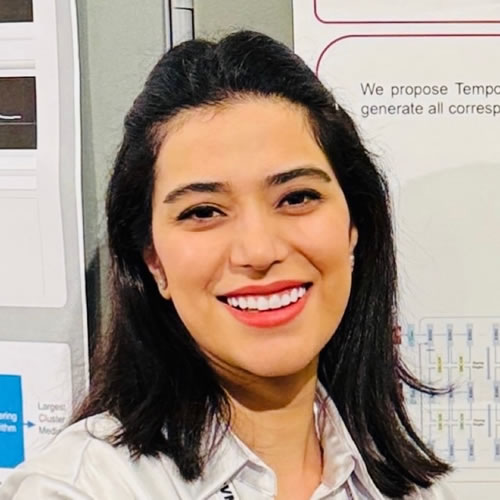
Dr.
Simin Mirzaei
University of British Columbia, Vancouver, BC, Canada
Advisory Board
(to be announced)
Participate
If you want to get involved beyond submitting an article, please consider organizing a workshop, a thematic session, or a demo. Details are available on the Event Satellites page.
- Call For Papers
The rapid evolution of computer vision, deep learning, and multi-modal sensor fusion has transformed how machines interpret the physical world, elevating recognition systems from isolated software tools to foundational blocks of modern automation. At the core of this transformation is the need to bridge the gap between raw data acquisition and high-level semantic understanding. Modern recognition framework architectures process an array of complex inputs – ranging from optical signals and geometric shapes to structural signage and dynamic situational context – translating environmental stimuli into actionable intelligence in real-time.
The landscape of recognition technology has shifted from isolated feature extraction to deeply integrated, multi-modal systems. Current recognition systems leverage deep learning, transformer architectures, graph-based models, foundation models, and hybrid approaches to process multi-modal information. Modern systems no longer just classify data; they interpret complex environments in real time by fusing low-level signal processing with high-level semantic reasoning. This enables automated systems to maintain high accuracy and operational reliability across volatile, real-world deployment architectures.
Achieving reliable machine perception requires addressing severe real-world constraints, such as shifting environmental lighting, occluding objects, and unpredictable weather hazards. To overcome these barriers, contemporary research increasingly relies on advanced AI-supported tools and technologies.
There are several critical bottlenecks that remain unaddressed across the research landscape that are looked at for the RECOG series.
- Contextual Edge Decay: Models fail when moving from cloud environments to resource-constrained edge hardware.
- Semantic Ambiguity: Systems struggle to interpret intent, nuance, and behavioral context in unpredictable, dynamic situations.
- Data Scarcity: Heavy reliance on massive, labeled datasets restricts deployment in niche or emergent applications.
- Cross-Modal Synchronization: Hardware and algorithmic architectures cannot seamlessly fuse asynchronous sensor feeds at low latency.
- Adversarial Vulnerability: Real-world systems lack standard testing metrics for physical-world security and identity spoofing.
This conference provides a multidisciplinary forum for researchers, engineers, practitioners, and system developers to present advances in recognition models, engineering methodologies, architectures, and applications. By bringing together developments in computer vision, signal processing, sensor technologies, machine learning, semantic reasoning, and intelligent systems engineering, the event aims to advance the next generation of recognition systems capable of supporting reliable, context-aware, and human-centered decision making.
Topics
- Pattern recognition and statistical learning
- Feature extraction and representation learning
- Deep neural recognition models
- Few-shot, zero-shot, and transfer learning
- Multi-modal recognition
- Probabilistic and uncertainty-aware recognition
- Explainable recognition models
- Continual and adaptive recognition
- Near field and remote sensing
- Optical character recognition (OCR) in high-noise environments
- Automated extraction of digital signage telemetry
- Visual hand gesture recognition and translation systems
- Multi-spectral and infrared signal classification
- Real-time optical wave-front sensing and reconstruction
- Light-fidelity (Li-Fi) signal detection and decoding
- Laser-based remote sensing and target identification
- Fiber-optic sensor signal pattern recognition
- Object detection and localization
- Shape and geometric recognition
- Geometric cue extraction (circles, triangles, diamonds)
- Region of Interest (ROI) localization algorithms
- Color space segmentation under dynamic illumination
- Scale-invariant feature transforms for object contouring
- Topological data analysis for structural shape recognition
- Boundary descriptor optimization for complex shapes
- Deformable part models for flexible object tracking
- Face and person recognition
- Scene understanding
- Traffic sign and road infrastructure recognition
- Medical image recognition (medical image segmentation, diagnosis, pathology recognition, multimodal medical imaging, radiology AI)
- Industrial inspection and defect recognition
- Remote sensing and aerial image recognition
- Human activity recognition
- Gesture and posture recognition
- Emotion. attention modeling, and affect recognition
- Facial expression analysis and micro-expression detection
- Gaze tracking, visual cues, and visual attention modeling
- Dynamic lighting compensation (glare, tunnels, night-to-day)
- Event and anomaly recognition
- Situation and context recognition
- Crowd behavior analysis
- Autonomous environment perception
- Crowd dynamics and mass behavior pattern analysis
- Risk, emergency recognition, and hazard mitigation
- Object detection under severe weather (fog, rain, snow)
- Partial occlusion handling and amodal perception algorithms
- Human-robot interaction (HRI) via gesture control
- Predictive behavior modeling in crowded environments
- Optical character recognition
- Document understanding
- Speech and speaker recognition
- Audio event recognition
- Biomedical signal recognition
- Time-series and industrial signal recognition
IoT-based recognition systems
- Image quality enhancement
- Image restoration
- Image denoising
- Deblurring
- Super-resolution
- Low-light enhancement
- Domain adaptation for degraded images
- Semantic scene understanding
- Context-aware recognition
- Concept recognition
- Relationship and interaction recognition
- Knowledge-assisted recognition
- Vision language recognition
- Recognition with knowledge graphs
- Explainable semantic interpretation
- Next-generation iris and retinal scanning technologies
- Contactless 3D fingerprint and palmprint recognition
- Voiceprint analysis and speaker identification in noisy venues
- Deepfakes and synthetic identity detection methods
- Soft biometric traits for broad-scale filtering
- Privacy-preserving biometric encryption and template protection
- Cross-spectral face recognition (thermal to visible)
- Biometric identification via gait and anthropometric data
- Multi-biometric fusion architectures for high-security access
- Embedded recognition systems
- Edge and cloud recognition architectures
- Distributed recognition systems
- Real-time recognition pipelines
- Robustness and uncertainty engineering
- Evaluation and benchmarking
- Dataset benchmarking and performance evaluation
- Generalization across domains and unseen environments,
- Model calibration and confidence estimation
- Open-set and open-world recognition
- Explainability and interpretable recognition systems
- Fairness, bias, and trustworthy AI
- Privacy-preserving recognition
- Recognition system lifecycle management
- Smart transportation
- Road situation awareness
- Synthetic dataset generation for rare traffic sign training
- Smart cities
- Crowed movement recognition and tracking
- Home automation robotics and autonomous systems
- Healthcare and assisted living
- Manufacturing and Industry 5.0
- Infrastructure inspection and monitoring
- Structural health monitoring
- Agriculture (crop & soil monitoring) and livestock (ID, migration)
- Environmental monitoring (oceanic, forestry, etc.)
- Marine surface vehicle obstacle detection and avoidance
- Agricultural robotics for crop health and weed recognition
- Crowd security and surveillance
- Macro-environment signage mapping
- V2X collaborative signage verification
Instructions for Authors
For more information on the submission process, please consult The Detailed Instructions for Authors.
To submit your work to this event:
- Scientific Board
(to be announced)
- Submit an Article
Before submitting, please consult The Detailed Instructions for Authors.
To submit your work to this event:
- Event Satellites
If you are interested in organizing a workshop, a thematic session, or a demo within the program of this conference, we are looking forward to hearing from you.
The details for what this entails are available at Event Satellites. The contact information on that page will serve as the starting point with someone ready to answer any questions you may have and to help set up the required logistics.
- Camera Ready
Prepare the camera-ready following these guidelines:
- Ensure the paper is formatted according to the IEEE formatting template. See https://www.ieee.org/conferences/publishing/templates
- Consider all the comments from the reviewers that were sent with your acceptance notification email.
- Do NOT include page numbers or any copyright information.
- The length is 6 pages of text (including figures and references) in the standard IEEE two-column format above, with the possibility of 2 extra pages.
Upload your camera-ready to DTR Society Press here:
- Registration
The registration site will be open at the same time as the notification date.
Details about the registration process are available on the Registration page.
- Publication
All accepted and registered papers (full papers and short/work in progress papers), regardless of presentation mode, will be published in the conference Proceedings under an ISBN reference and included in the Digital Library.
Proceedings: DRT Society Press
Library: DTR Society Digital Library
Accepted and registered Posters and Contributed Talks, regardless of presentation mode, will be posted on the conference webpage.
- Presentation
All accepted and registered contributions are allotted a 25-minute presentation slot in the conference program.
We encourage all authors to attend the conference and present in person whenever possible. We recognize, however, that travel or other circumstances may prevent some presenters from attending the conference physically. Authors who are unable to present in person may request to deliver their presentation live via Zoom.
Please note that in-person sessions at the conference venue will not be streamed. Remote presenters will join their assigned session via Zoom, while attendees at the conference venue will participate in person.
Additional information and instructions for both in-person and Zoom presentations are available on the Presentations page.
- Peer Review
Methodology
All submissions are peer reviewed by three or more reviewers, and evaluated based on relevance, technical content, originality, competence, significance, and presentation.
Reviewers are asked to offer constructive feedback to help the authors improve their work, regardless of whether the submission is accepted or rejected.
Reviewers are expected to adhere to our Conduct Policies.
Notification
Notification of acceptance or rejection will be issued by the evaluation system and sent to the contact author email address.
Rebuttal
Authors have a period for rebuttal of one week after notification. A rebuttal can be filed by contacting us along with the relevant data (conference name, submission number, and reason for rebuttal).
All rebuttals are answered, and the decisions are final.
- Indexing
Most events are at the beginning of their series. Indexing is planned for the coming years, once the events mature and become solid in terms of number of contributions and content.
DTR Society aims to enhance the visibility of all its publications. The proceedings will be submitted to various indexes like Google Scholar, SCOPUS, DBLP, PubMed, HCIBib, EI-Compendex, etc.
- Conference Venue
The conference will take place at:
NOVOTEL BARCELONA CORNELLÀ
Avenida Maresme 78
08940, CORNELLA DE LLOBREGAT
BARCELONA
Phone: +34 934 74 70 00
Email: H3667@accor.com
For more information about the conference venue, please consult the Novotel Barcelona Cornella page we have put together.
- Touristic Information
For places to visit around the conference location, please consult the Barcelona touristic information page.
- Program
| Location NOVOTEL BARCELONA CORNELLÀ Day 1: Sunday, November 14 |
||
| Time | Conference Room #1 | |
| 12:00 – End of Day | Participant Registration | |
| Invited Speeches | ||
| 19:00 – 20:00 | Welcome Reception | |
| Day 2: Monday, November 15 | ||
| Time | Conference Room #1 | Conference Room #2 |
| 09:15 – 09:30 | Opening Remarks | |
| 09:30 – 10:30 | Invited Speech | |
| 10:30 – 11:00 | Morning Break | |
| 11:00 – 12:30 | Presentations Session | Presentations Session |
| 12:30 – 14:00 | Lunch | |
| 14:00 – 15:30 | Presentations Session | Presentations Session |
| 15:30 – 16:00 | Afternoon Break | |
| 16:00 – 17:30 | Presentations Session | Presentations Session |
| 20:00 – 22:00 | Social Dinner | |
| Day 3: Tuesday, November 16 | ||
| Time | Conference Room #1 | Conference Room #2 |
| 09:30 – 10:30 | Invited Speech | |
| 10:30 – 11:00 | Morning Break | |
| 11:00 – 12:30 | Presentations Session | Presentations Session |
| 12:30 – 14:00 | Lunch | |
| 14:00 – 15:30 | Presentations Session | Presentations Session |
| 15:30 – 16:00 | Afternoon Break | |
| 16:00 – 17:30 | Presentations Session | Presentations Session |
| Day 4: Wednesday, November 17 | ||
| Time | Conference Room #1 | Conference Room #2 |
| 09:30 – 10:30 | Invited Speech | |
| 10:30 – 11:00 | Morning Break | |
| 11:00 – 12:30 | Presentations Session | Presentations Session |
| 12:30 – 14:00 | Lunch | |
| 14:00 – 15:30 | Presentations Session | Presentations Session |
| 15:30 – 16:00 | Afternoon Break | |
| 16:00 – 17:30 | Presentations Session | Presentations Session |
| Day 5: Thursday, November 18 | ||
| Time | Conference Room #1 | |
| 09:30 – 10:30 | Invited Speech | |
| 10:30 – 11:00 | Morning Break | |
| 11:00 – 12:30 | Presentations Session | |
| 12:30 – 14:00 | Lunch | |
| 14:00 – 15:30 | Presentations Session | |
| 15:30 – 16:00 | Closing Remarks | |